Using -wa in Japanese and in English

One of the most difficult tasks of teaching Japanese to English speakers is the explanation of wa. Linguists are always trying to find systematic or consistent ways of explaining what something means. For those who don’t speak Japanese, wa is a sentence particle that goes on the topic of the sentence, telling someone what is … Read more

Introduction to Agama Sutra: The First Buddhist Scripture

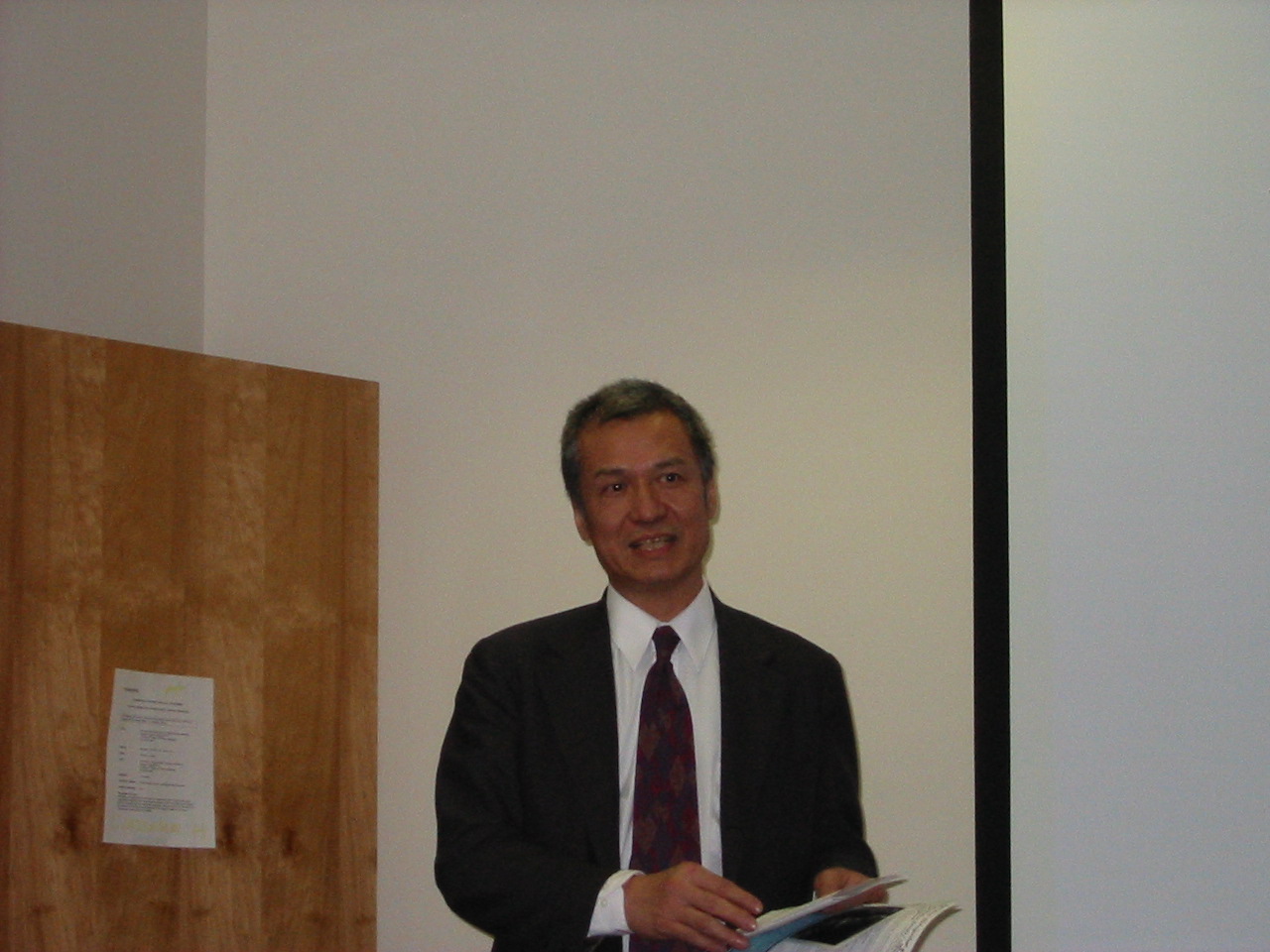
The Mahayana school of Buddhism in China often emphasized the role of altruism and disparaged self-salvation. Its sutras were considered to be the first sermons by the Buddha whose profound ideas were too difficult for the ordinary people to understand. To cater to their level, it was said that Buddha then delivered the Agama Sutra for the less intellectually endowed. For more than 1500 years after it was translated into Chinese, Agama Sutra has been ignored by Chinese Buddhists mainly because of this prejudice. More recently, Master Yin Shun has vastly expanded the research started by Lu Jing, and has written many volumes of texts to clarify the origins of Buddhism. This lecture will be based mostly on writings by him and his disciples.

Read more

Re-mapping the Other: Cultural Translation in Asian/Pacific and Caribbean American Writing

Beginning with a quote by Michel Foucault, Prof. Tricia Lin explained how transnation and translation were used as cultural survival strategies. The audience asked questions that explored the issue of post-colonial island literature and its impact. “We are in the epoch of simultaneity: we are in the epoch of juxtaposition, the epoch of the near … Read more

Diabetes and Glucose Biosensors

Diabetes is the Nation’s 7th leading killer based on a 1998 statistical survey reported by Center for Disease Control showing 15.7 million Americans (5.9% of the U.S.A. population) afflicted with diabetes mellitus. Diabetes mellitus is classified as two main types, Type I and Type II. Type I is insulin-dependent and often occurs during childhood or … Read more