Friday, March 6, 2026 | 6pm to 7:30pm
25 West 43rd Street, 10th Floor, Room 1000
between 5th & 6th Avenues, Manhattan
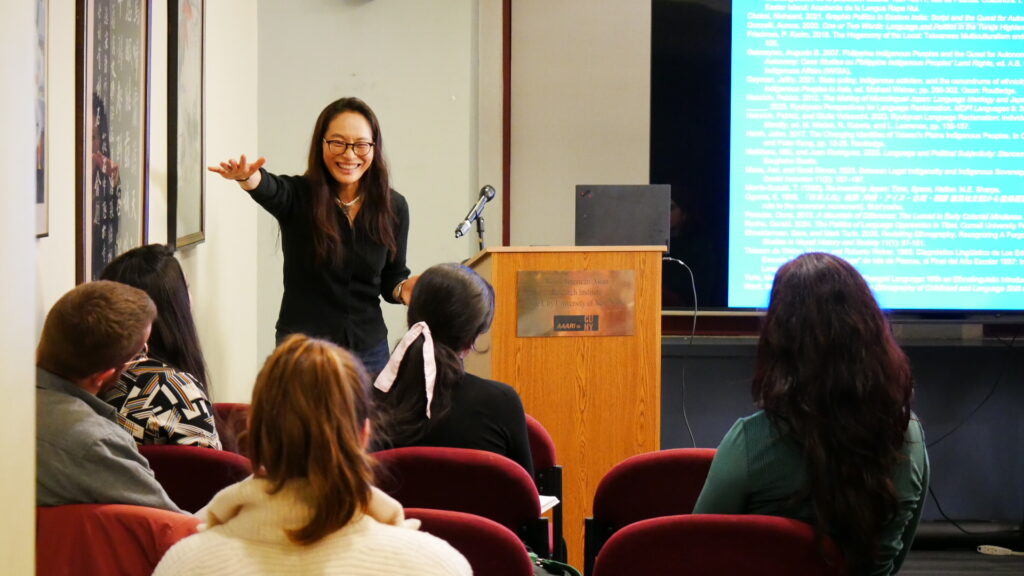
What happens when a community’s native language isn’t the language they speak at home?
In this talk, Miki Makihara draws from her new co-authored book, Language and Political Subjectivity: Stancemaking, Power and Politics in Chile and Venezuela, to explore a central challenge for Rapa Nui (Easter Island) language and political activists. In their fight for their land and local autonomy, activists have elevated maitaki Rapa Nui—a “pure,” ancestral form of the language. This “cherished” language is a powerful public tool for asserting political authenticity.
Yet, this is not the intimate language of the home. Makihara explores the tensions between this purified, political language variety and the syncretic, mixed variety that forms the “glue” of Rapa Nui’s everyday sociality. The talk examines what this paradox means for the future of Rapa Nui struggle for sovereignty.
Purchase Book: https://www.berghahnbooks.com/title/MakiharaLanguage